
We are a family-run renovation team serving Carlow and the surrounding areas.
What Is a Bathroom Renovation Contingency?
A contingency is money you set aside for unexpected work outside the agreed scope of your renovation.
Allowing around 10–15% is a budgeting starting point, not an automatic additional charge. If no extra work is needed, the money stays with you. Older bathrooms with persistent leaks or unknown structural conditions may need a larger allowance.
For example, on an agreed renovation price of €8,000, a 10–15% contingency would mean keeping €800–€1,200 available. This is an illustration of the allowance, not a bathroom renovation quotation.
Water Damage and Rotten Floors Beneath a Bath or Shower
Water can gradually seep beneath a shower tray, bath or floor covering. Visible signs of a leak do not always reveal the full extent of the damage underneath.
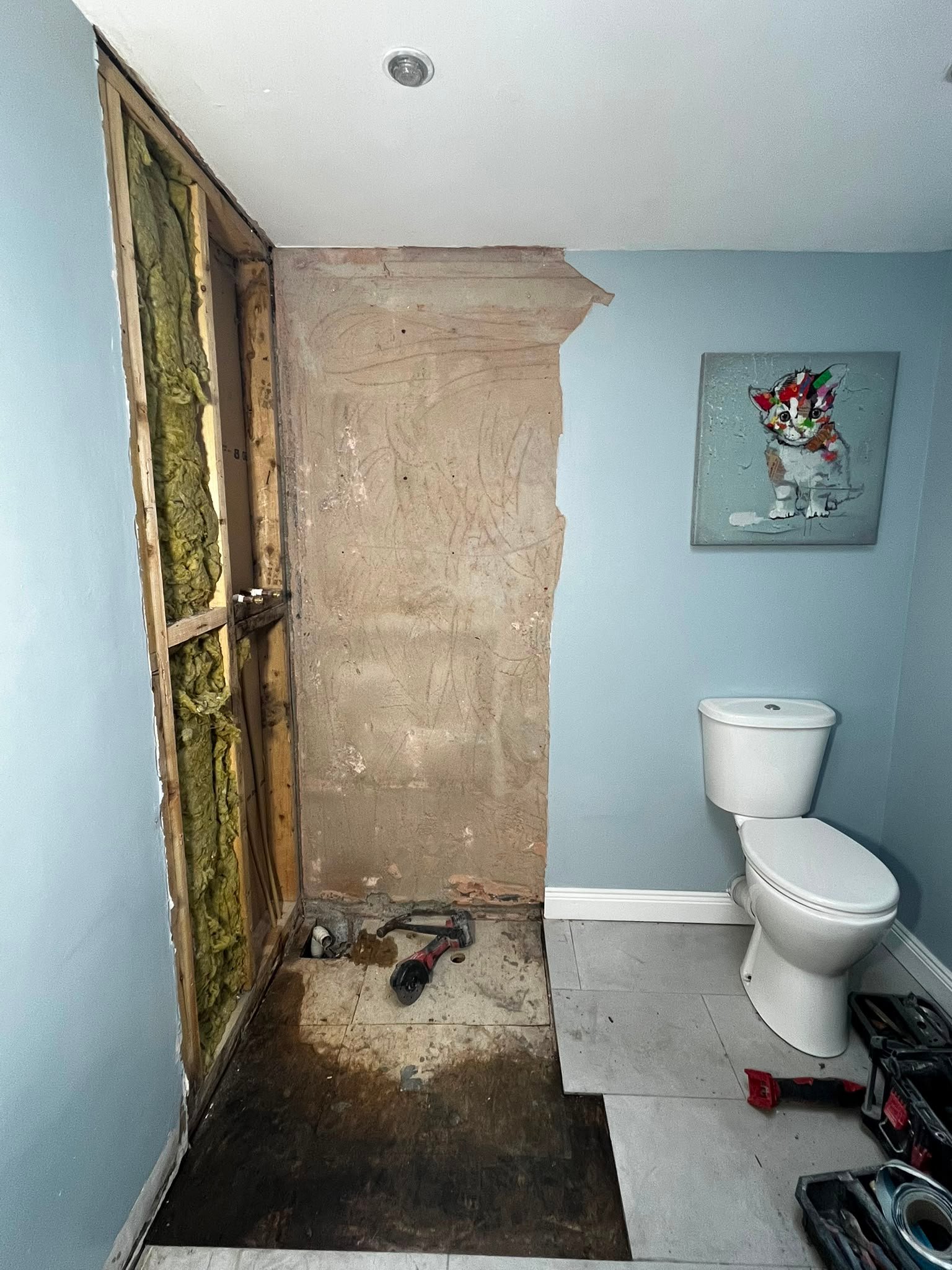
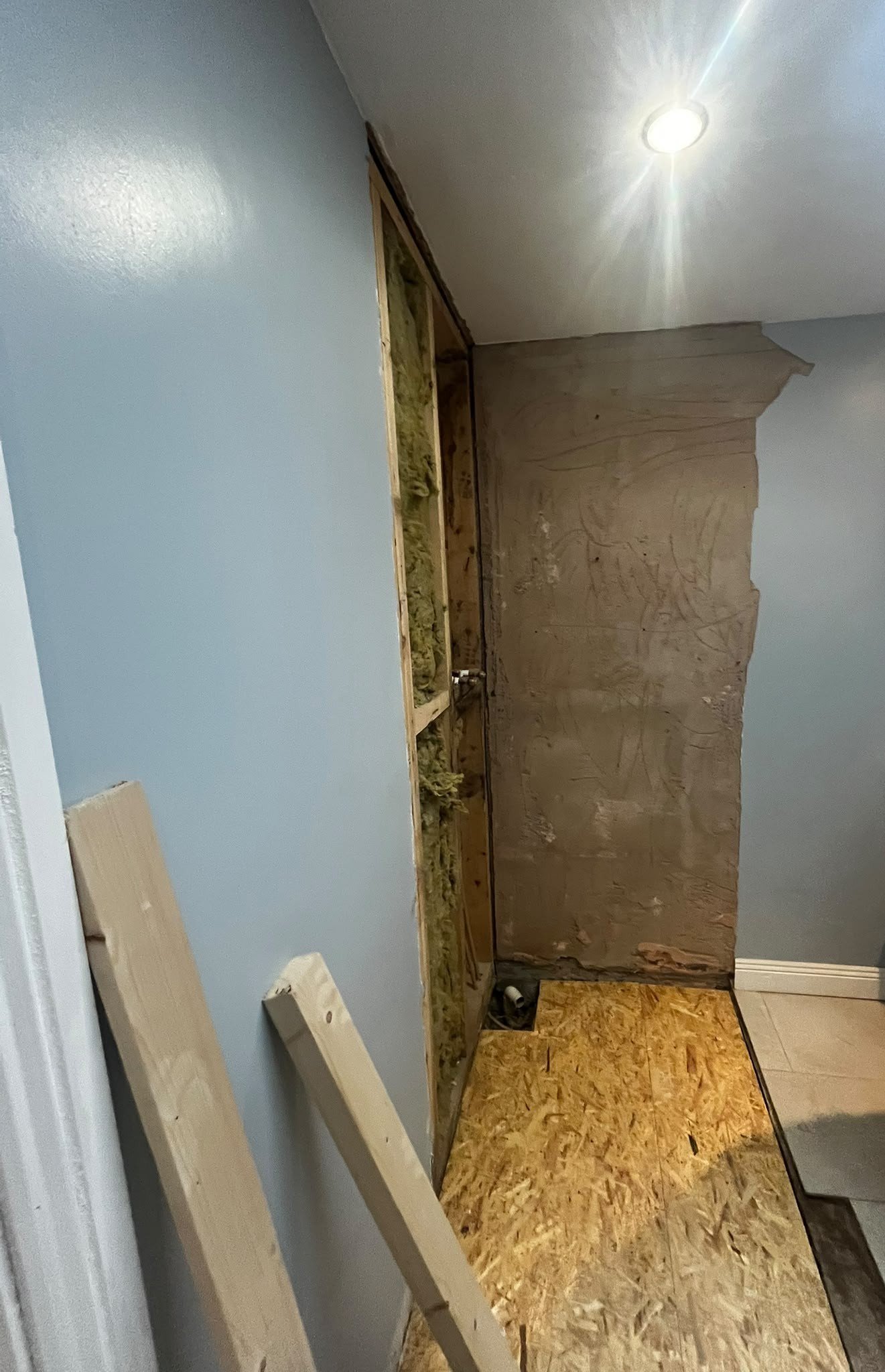
From our projects: a small shower room had experienced persistent leaks for around a year. Once we removed the existing fittings and finishes, we discovered a rotten floor that needed replacing before the renovation could continue.
Before installing the new shower tray and tiles, we needed to repair the floor and create a sound base for waterproofing. This added materials, labour and time to the renovation.
Levelling Bathroom Floors and Walls Before Tiling
Removing old tiles can reveal uneven floors, damaged surfaces beneath the tiles or walls that are significantly out of line. Old plaster may also come away with the tiles, increasing the preparation required.
From our projects: in one bathroom, we needed to level the floor and walls before tiling to create an even surface for the tiles.
The preparation method depends on the condition of the existing surfaces and their exposure to water. Areas exposed to direct water require a suitable backing and waterproofing system.
Can You Tile Without Levelling the Walls?
You may choose to leave minor unevenness to reduce costs, provided the surface remains suitable for a reliable tile installation.
Uneven walls can leave visible imperfections in the tiled surface, corners and edges around fittings. These can be especially noticeable with large-format tiles. We explain any limitations before work begins.
If the surface is weak, crumbling or unsuitable for tiling, repairs and preparation are necessary before we can proceed.


Old Pipework and Toilet Drainage Problems
Hidden pipes and connections cannot always be inspected during the initial visit. Opening up the bathroom may reveal leaks, worn connections or pipework that needs altering.
From our projects: during a small bathroom renovation, we encountered an incorrect fall on the waste pipe serving the toilet. Correcting it required cutting and replacing sections of pipework and modifying the connection layout.
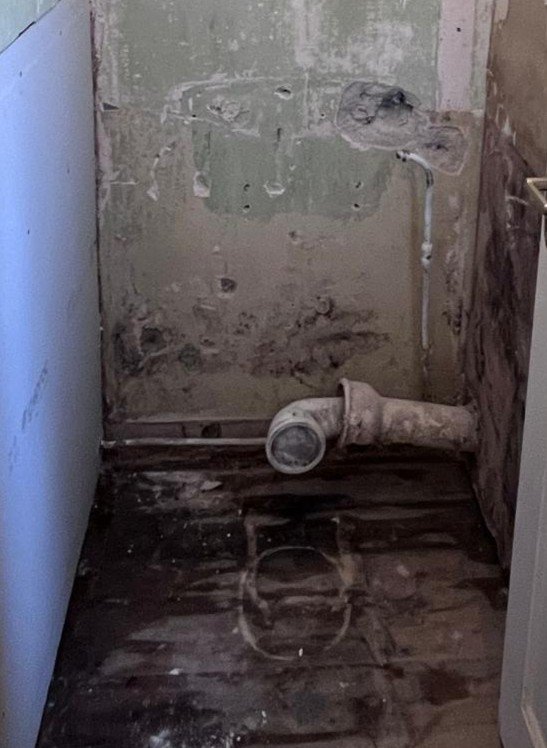
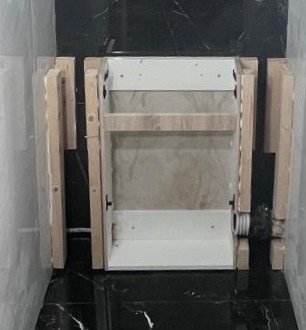
These alterations were needed for the drainage to function correctly.
Problems visible during the initial inspection should be considered in the quotation. Where an issue is concealed, the proposed repair and its cost should be explained once it is uncovered.
Additional Electrical and Ventilation Work
A renovation may reveal that the existing electrical installation or ventilation needs attention. New lighting, an illuminated mirror or an extractor fan may also require additional wiring or connections.
Repairs to an existing problem and newly requested fittings can both affect the budget.
Include planned lighting and ventilation in the initial discussion so they can be allowed for in the quotation.
How Changes to Tiles, Niches and Shelves Affect the Cost
Not every extra cost comes from hidden damage. Changes to previously agreed choices can also increase the amount of work.
Changing Tile Size, Material or Layout
Changing your tiles can affect installation costs, even when the tiles themselves cost the same.
Large-format tiles, mosaics and certain natural stones can require different preparation, materials, tools and more installation time. Complex patterns, extensive cutting and additional mitred edges can also increase labour costs.
Agree the tile size, material and layout before the final quotation wherever possible. If your selection changes later, ask whether it affects the installation price before ordering.
Adding Shelves, Recessed Niches or Pipe Boxing
A shower shelf, recessed niche or tiled boxing to conceal water and waste pipes may look like a small addition. However, it can involve:
- Building a frame and fitting suitable boards.
- Waterproofing the relevant surfaces and junctions.
- Additional tiling, cutting and edge finishing.
- Adjusting the surrounding tile layout.
Integrated lighting, relocating sanitaryware and other layout changes can add further work.
These additions involve work beyond the original plan and may affect both the price and completion date.
What Should Your Bathroom Renovation Quote Include?
A clear quotation should explain the agreed work, materials, exclusions and any allowances or assumptions.
When discussing additional costs, distinguish between:
| Type of additional work | What it means |
|---|---|
| Concealed problem | Damage or a defect that could not be fully assessed before removing the existing finishes. |
| Agreed exclusion | Work or materials clearly identified as outside the quoted price. |
| Change to the agreed plan | An addition or change to previously agreed choices. |
Before approving an extra charge, check whether the work is already covered by the original quotation.
How to Reduce Unexpected Bathroom Renovation Costs
Before work begins, agree on:
- The work and materials included in the price.
- Any exclusions and items that have not yet been priced.
- Tile size, material and layout.
- The positions of sanitaryware, lighting, shelves, niches and pipe boxing.
- Areas that cannot be inspected until the existing fittings and finishes are removed.
- How additional work will be priced and approved.
If a hidden problem is discovered, ask for an explanation and photographs where practical. Agree what needs to be done, the additional cost and any effect on the schedule.
Record changes in writing before the additional work begins. A contingency helps you prepare for uncertainty; clear communication helps you control how it is used.
Frequently Asked Questions
Does Every Bathroom Renovation Cost an Extra 10–15%?
No. A contingency is money kept available for unexpected work, not an automatic surcharge. Some projects need little or none of it; others may require more, depending on what is uncovered and any changes to the agreed plan.
Can Hidden Problems Be Identified Before Work Starts?
Some can be identified during an inspection, particularly where there are visible leaks or accessible pipes. Others remain concealed beneath tiles, flooring, baths or shower trays until removal.
Can Changing Tiles Increase Labour Costs?
Yes. Even tiles with the same purchase price can cost different amounts to install because of their size, material or layout.
Should Additional Work Be Approved First?
The contractor should explain the proposed work, its cost and any effect on the schedule, and agree these with the customer before proceeding.
PLANNING A BATHROOM RENOVATION?
Planning a Bathroom Renovation in Carlow or Nearby?
HeartBuild Team provides bathroom renovation and wall and floor tiling services in Carlow and the surrounding areas.
Send us photos of your bathroom, a brief description of your plans and your address or Eircode. We can discuss the proposed work, preparation requirements and what should be considered when preparing your quotation.